















































- 21 September
-
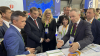
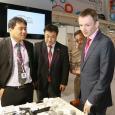
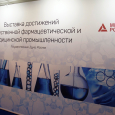
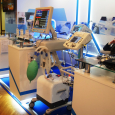
On September 11–17, 2026, Ekaterinburg hosted the International Youth Festival, a large-scale event that brought together 10,000 young leaders from 191 countries. At the festival running under the motto «Follow Your Dream,» the Medsintez Plant presented its exhibition, showcasing the achievements of the Ural pharmaceutical industry in the field of import substitution.
- 18 September
-

The updated clinical guidelines for treatment of ARVI in children took effect on September 2, 2026. The document was developed by leading experts from the Union of Pediatricians of Russia, the Interregional Association for Clinical Microbiology and Antimicrobial Chemotherapy (IACMAC), and the Russian Society of Emergency Medical Care and approved by the Scientific and Practical Council of the Ministry of Health of the Russian Federation. It fundamentally shifts therapeutic approaches toward enhanced safety and minimal drug burden.
- 14 September
-

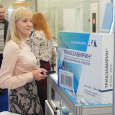
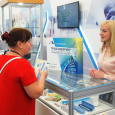
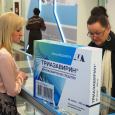
On September 3–4, 2026, Nizhny Novgorod hosted the 2nd Regional Endocrinological Congress: Challenges and Prospects of the Volga Region, with the active participation of the Medsintez Plant. As a strategic company, Medsintez Plant has been ensuring Russia's pharmaceutical security for 25 years. Company's exhibition booth showcased a range of hormonal medications for treatment of type 1 and type 2 diabetes, as well as drugs for infertility treatment through the IVF method.
- 04 September
-

More than twenty years ago, the Regiony Rossii (Regions of Russia, RR) magazine witnessed the birth of an innovative pharmaceutical production facility in Novouralsk, which had no analogues in the country. Today, the Medsintez Plant is a strategic asset in terms of national pharmaceutical security, a recognized industry leader, a National Champion, and a winner of prestigious awards. The secret behind the success of the Ural school of pharmaceuticals and biotechnology is explored in this article by RR.










































- Home
- Cluster members
- Postovsky Institute of Organic Synthesis Ural Branch of the Russian Academy of Sciences
Postovsky Institute of Organic Synthesis Ural Branch of the Russian Academy of Sciences
Created by the decision of the Presidium of the Russian Academy of Sciences dated 29.06.93, however, it has deep historical roots, being, in fact, one of the first scientific institutions of the Ural Branch of the Russian Academy of Sciences. In 1932, with the direct participation of Academician I.Ya. Postovsky, was established the Institute of Chemistry of the Ural Branch of the USSR Academy of Sciences, which organic chemical laboratories became the basis of the institute.
The institute includes 5 laboratories and 4 groups. On the basis of the Institute of Organic Synthesis, there are branches of the Departments of Organic Chemistry of the Ural Federal University, joint laboratories with the Department of High- Molecular Compositions of the Ural Federal University and the Faculty of Chemistry of the Chelyabinsk State University, Research Equipment Sharing Center of the Ural Branch of the Russian Academy of Sciences “Spectroscopy and Organic Compound Analysis”, laboratory of the Ural Scientific and Educational Center “Advanced Materials”.
Development of the Institute is based on the following guidelines:
1. Combining the best traditions of the Urals scientific school of organic chemists with innovative approaches to development of fundamental research aimed at creating new methodologies for organic synthesis, taking into account the latest achievements of world science in such important areas as C-H functionalization of aromatic and heteroaromatic substances, synthesis of enantiomerically pure biologically active compounds, chemistry of fluorine-containing compounds, chemistry of organo(boron)element compounds, asymmetric catalysis, supramolecular and coordination chemistry, transformations of heterocycles, electro- and photosynthesis, chemistry of monomers and polymers, gas-, oil- and coal chemistry.
2. Reasonable balance of fundamental and applied research. Development of fundamental research in organic synthesis, focused on creation of drugs combating infectious diseases of viral and bacterial etiology, including those active against viruses, bacteria and mycobacteria with multidrug resistance, as well as anticancer, anti-inflammatory and other chemotherapeutic agents. Medical and biological studies of drugs as part of preclinical and clinical studies thereof.
3. Development of fundamental and applied research in the field of organic materials science, as the most important direction of the Strategy for Scientific and Technological Development of the Russian Federation. Strengthening cooperation with universities and enterprises of the real sector of economy. Carrying out a full cycle of research and development applied work to create new organic materials for medicine and technology, including for enterprises of the military- industrial complex, including development of materials, methods and technologies for production thereof.
