

























































































































High-Yield Producer of Domestic Dulaglutide Analog Developed
Scientists from the Federal Research Center of Biotechnology of the Russian Academy of Sciences (RAS), in collaboration with Medsintez Plant, have developed a cell line that produces an analog of dulaglutide, a drug used to treat patients with type 2 diabetes. In the context of import substitution, creating a domestic bioanalog of this critically needed medication is of paramount importance. At the request of their industrial partner, the scientists utilized a previously engineered apoptosis-resistant cell line to develop an approach that accelerates the generating of stable producers and increases the yield of the target protein. The results of this study have been published in the Pharmaceuticals journal.
Over the past decade, diabetes therapy options have expanded significantly, driven by the emergence of innovative classes of glucose-lowering drugs. One of them is dulaglutide, a member of the GLP-1 receptor agonist group. The convenience of use, as it requires only once-weekly administration, is its clear advantage.
In recent years, the availability of several modern biologics in Russia has been limited due to the sanctions regime. This significantly increases risks for both patients and the domestic healthcare system as a whole. Consequently, the task of accelerated import substitution for type 2 diabetes medications and related cardiometabolic complications has acquired not only economic, but also acute social significance.
Responding to the challenges of our time, Medsintez Plant LLC tasked the scientists with developing an import-substituting production technology for dulaglutide. The research team at the Federal Research Center of Biotechnology RAS successfully completed the study, funded by their industrial partner, within a tight timeframe, developing a cell line that produces a dulaglutide analog (GLP-1-Fc).
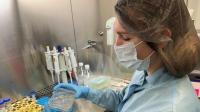
Dulaglutide is produced on an industrial scale using Chinese hamster ovary (CHO) cells. To create the analog producer, scientists from the Laboratory of Mammalian Cell Bioengineering at the Federal Research Center of Biotechnology RAS utilized a previously engineered apoptosis-resistant line, CHO 4BGD, and developed an approach that accelerates the generating of stable producers while increasing the target protein yield.

The study utilized a sequential cell selection scheme: the dulaglutide gene is introduced into the cells twice using two different selection markers – dihydrofolate reductase and glutamine synthetase. This approach immediately yields a 30% increase in productivity compared to using a single marker and eliminates all low-yielding cells from the population. The selected cell clone produces the target protein in quantities sufficient to yield at least 300 doses of dulaglutide per liter of medium, paving the way for economically viable commercial manufacturing.
After purification, the quality and activity of the obtained protein met the standards required for further development, with the monomeric form reaching at least 95%. The target protein medication exhibited biological activity similar to the reference drug, as measured using a human cell line expressing the GLP-1 receptor. A key advantage of the engineered producer cell line is its high genetic stability.
«In this study, we demonstrated the applicability of our cell platform to solving practical problems. The right combination of the parental cell line and sequential dual-marker selection enables us to generate stable and high-yielding producers without the need for endless screening of thousands of clones. Moreover, this is not just a laboratory achievement for the sake of a flashy headline, but a stage in the industrial development of a biosimilar that is critically important for patients. For us, it is essential that our industrial partner is ready to quickly implement modern technologies and bring scientific results to practical application,» comments Ivan Vorobiev, Doctor of Biological Sciences and Head of the Laboratory of Mammalian Cell Bioengineering at the Federal Research Center of Biotechnology RAS.
The study was partly conducted by young scientists from the laboratory, who traveled to the plant’s facility to perform the technology transfer. Mariia Sinegubova was responsible for supporting biobanking and bioprocess, while Rolan Shaifutdinov oversaw the transfer of isolation and purification technologies.


The producer cell line developed by the researchers combines genetic stability with process scalability, representing an efficient and optimized framework for the rapid generating of highly potent CHO cell lines capable of producing the dulaglutide analog. The newly engineered high-yield producer could serve as the technological foundation for the step-by-step development of a domestic alternative to the medication.
The newly engineered dulaglutide-producing cell line is protected by a patent application (No. 2025120683). The patent applicant, Medsintez Plant, recognizing the importance of partnership between science and industry, expands its lineup of modern domestic medications and implements up-to-date technological solutions into manufacturing. Medsintez Plant possesses an advanced technological platform for the production of animal-derived cell-based biopharmaceuticals, which can also be utilized for generating monoclonal antibodies and executing CAR-T cell therapies. The dulaglutide analog-producing cell line developed by the scientists at the Federal Research Center of Biotechnology RAS has already been integrated at the plant. Currently, preclinical studies of the medication have been completed, and preparations for clinical trials are underway.
Source: Federal Research Center of Biotechnology RAS
