



















































































- Home
- News
- Alexander Petrov, Chairman of the Board of Directors of Medsintez Plant, Discusses Pharmaceutical Production Needs in Russia at the ChemTech Ural 2026 Forum
Alexander Petrov, Chairman of the Board of Directors of Medsintez Plant, Discusses Pharmaceutical Production Needs in Russia at the ChemTech Ural 2026 Forum
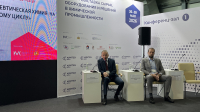
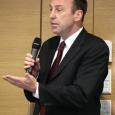
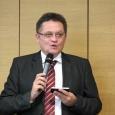
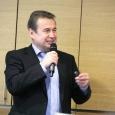
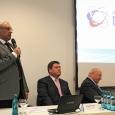
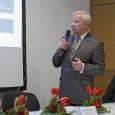
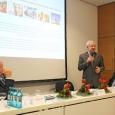
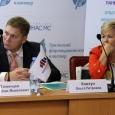
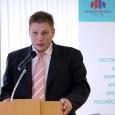
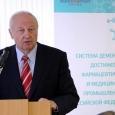
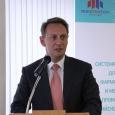
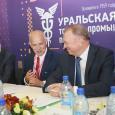
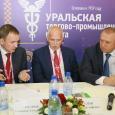
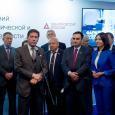
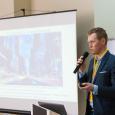
Pharmaceutical Chemistry: Towards Full-Cycle Production round table discussion was held as part of the business program at ChemTech Ural 2026. Alexander Petrov, Chairman of the Board of Directors of Medsintez Plant LLC, was the keynote speaker at the event.
In his speech, the expert shared the company's experience in developing the original Russian drug TRIAZAVIRIN® and discussed in details current challenges faced by domestic pharmaceutical manufacturers. He also thanked his partners and colleagues for their collaborative efforts, noting that this cooperation has successfully created the «country's antiviral shield» in the event of pandemics.
The report focused primarily on the shortage of pharmacopeial-grade (pharm grade) raw materials. Alexander Petrov outlined the plant's key technological platforms – biotechnology, organic synthesis, and solid-phase peptide synthesis – highlighting specific challenges for each of them.
He emphasized that biotechnology requires high-purity raw materials, including salts, trace elements, and solvents, whereas existing Russian offers are often only of technical grade. Peptide synthesis requires tonnage volumes of high-purity solvents, such as dimethylformamide, methyl tert-butyl ether, and trifluoroacetic acid, as well as sorbents for chromatographic purification. For finished dosage forms, there is an urgent demand for excipients of the highest purity – phenol, metacresol, and benzyl alcohol – which must also comply with «pharm grade» standards.
According to the speaker, a particular challenge is the impossibility of quickly changing a supplier due to the manufacturer's pharmacopoeial monographs (MPM). Any modification requires approval from the Ministry of Health, which involves significant expenditures of both time and financial resources.
Alexander Petrov emphasized that the key conditions for the sustainable development of the chemical industry are confidence in the reliability of raw material suppliers (a new supplier must not close down after three years), supply stability over a horizon of at least 10 years, production economics, and affordable raw material prices compared to suppliers from India and China. At the same time, he noted that the cost of Russian products is currently higher than foreign analogues due to insufficient production volumes. Nevertheless, the plant has already been working on entering the international markets of Pakistan, Indonesia, and South Africa.
At the end of his speech, the Chairman of the Board of Directors of Medsintez Plant expressed his hope for the launch of new production capacities for high-quality pharmaceutical chemicals, including within the framework of state-run projects, and urged colleagues to use Russian products more actively.
«With our developers, manufacturers, associations, and scientists, I am confident that Russian pharmaceuticals definitely have a future. They will be in demand all over the world,» concluded Alexander Petrov.
